



Solar Activity
How the 11-year cycle reshapes solar wind composition
Solar wind composition breathes in sync with the Sun's 11-year activity cycle. Fast wind from coronal holes maintains stable abundances regardless of solar activity, while slow wind abundances rise during solar maximum and crash during solar minimum—with heavier elements showing stronger modulation due to gravitational settling.
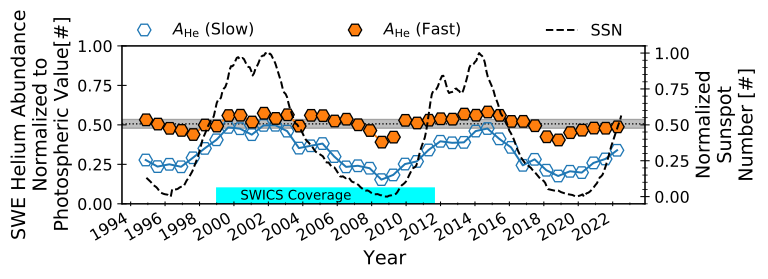
Slow-wind helium swings with the sunspot cycle
Related Figures
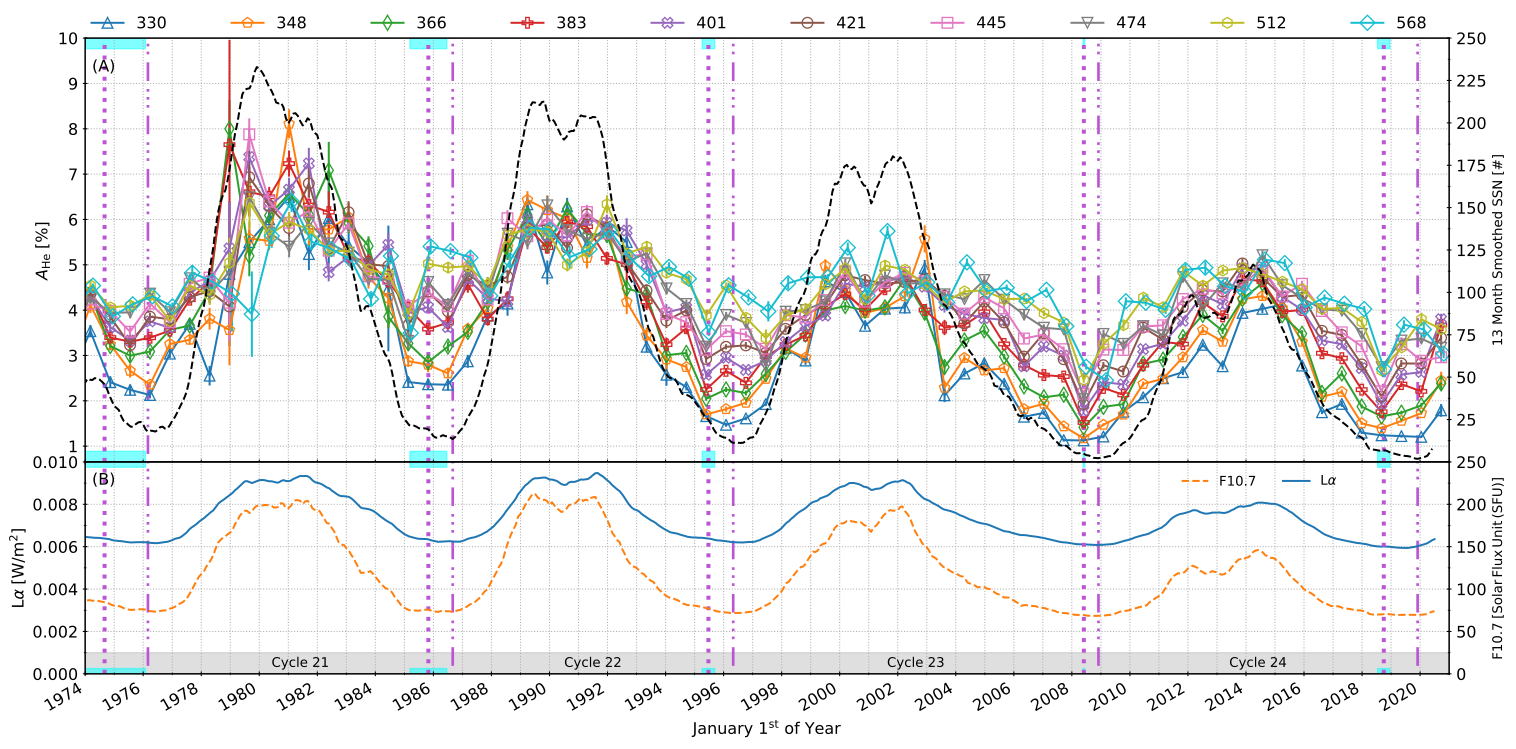
Helium depletes sharply before each solar cycle begins
Just before each new solar cycle begins, helium in the solar wind undergoes a rapid depletion and recovery that occurs at approximately the same time across all wind speeds.
Demonstrates predictive capability: helium shutoff consistently precedes solar minimum by ~10 months across four cycles
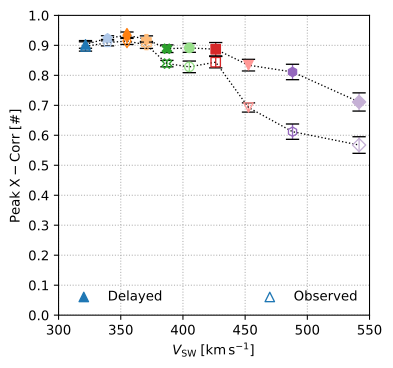
Delaying sunspot number lifts the helium correlation at all speeds
Accounting for the time delay between solar activity changes and helium's response dramatically improves the helium-sunspot correlation, especially in faster wind.
Shows that accounting for the time delay between solar activity and helium's response dramatically improves the helium-sunspot correlation at all speeds, overturning the conclusion that this was a purely slow-wind phenomenon
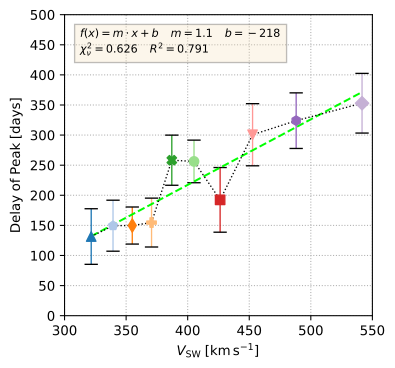
Faster solar wind waits longer to respond to solar activity
The delay between solar activity and helium's response increases at a rate of about 1.1 days per additional kilometer per second of wind speed.
Reveals that helium doesn't respond instantaneously—delay increases linearly with speed, providing a window into source region response times
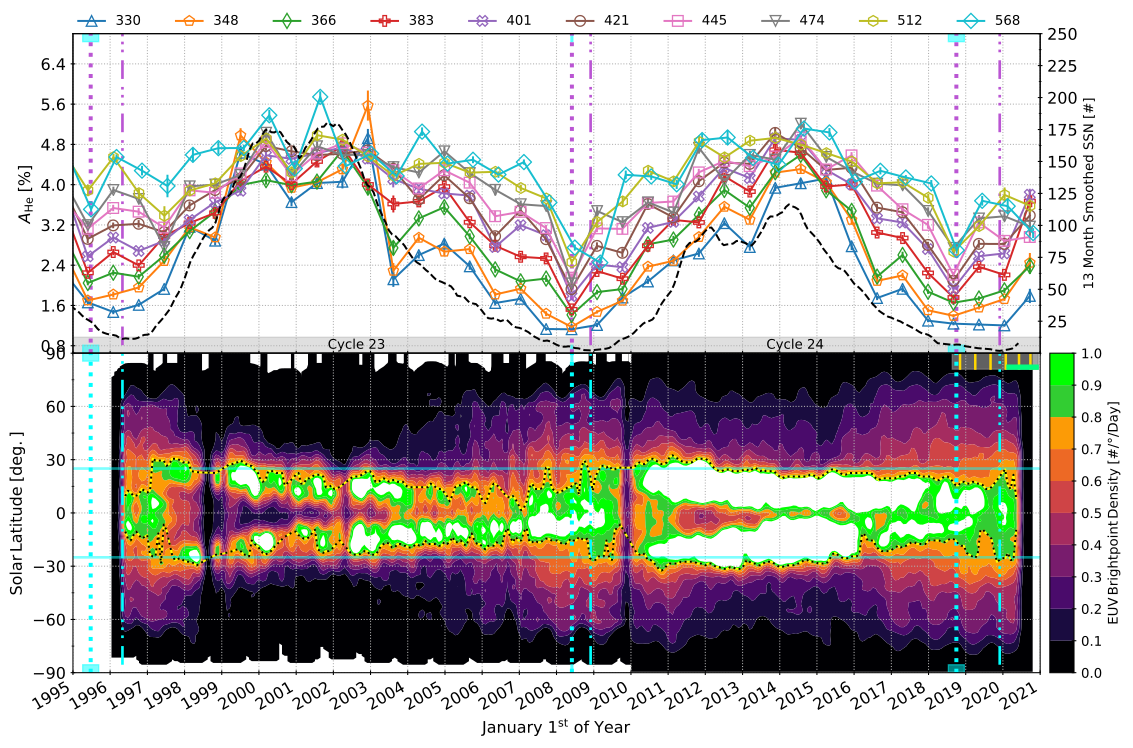
Helium shutoff coincides with new-cycle magnetic emergence
Helium shutoff occurs at approximately the same time that new-cycle brightpoints emerge at mid-latitudes, particularly in the hemisphere that leads the new cycle.
Shows that helium shutoff coincides with new-cycle magnetic emergence at mid-latitudes, linking the compositional transition to the underlying magnetic cycle
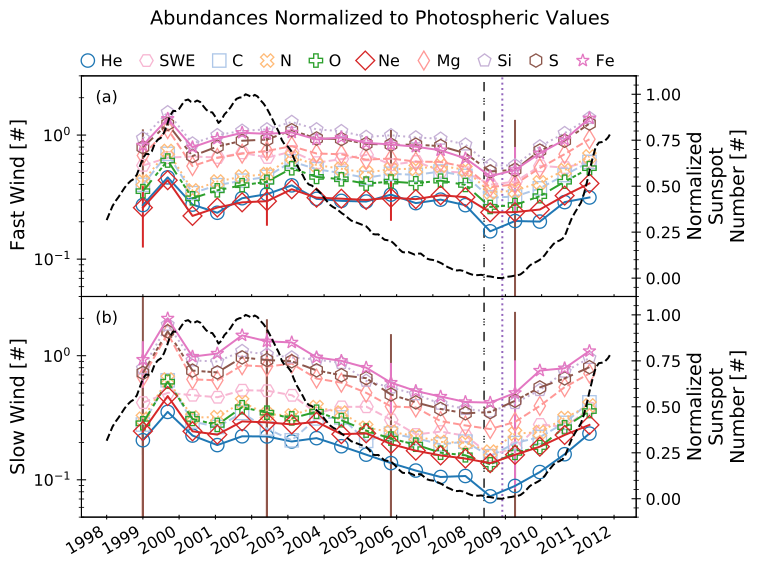
Slow-wind heavy element abundances dip at solar minimum
In the slow wind, all heavy element abundances except carbon track the solar cycle strongly, dropping during the deep solar minimum around 2008–2009 and recovering as activity rises.
Extends the helium finding across the periodic table, confirming the fast/slow dichotomy is universal
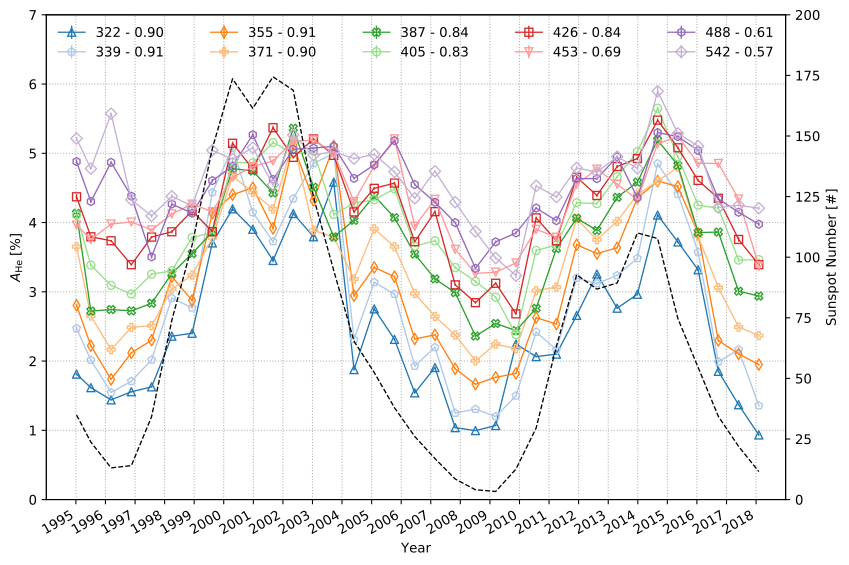
Slow-wind helium swings with the sunspot cycle over 23 years
Over a full 23-year span encompassing two complete solar activity cycles and one full magnetic reversal cycle of the Sun, helium abundance faithfully rises and falls with sunspot number at every wind speed.
Establishes the 23-year baseline showing helium abundance rising and falling with sunspot number at every wind speed across two complete solar cycles
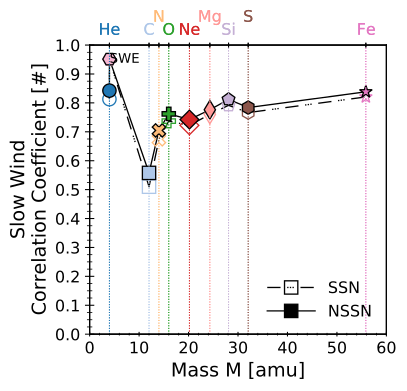
Correlation with solar activity grows with element mass
For elements heavier than helium, the correlation between slow-wind abundance and solar activity rises monotonically with atomic mass—from carbon (~0.51–0.56) to iron (~0.82–0.84).
Reveals the physical mechanism: gravitational settling preferentially depletes heavier elements during solar minimum
See Also
Source
Heavy ion abundances evolve with solar activity
Astronomy and Astrophysics (2025)
View Paper© 2025 The Authors. CC BY 4.0