




Heavy Ion Composition
Universal behavior below the fast-slow transition
When normalized to their saturation points, all heavy ion species follow an identical trajectory in slow solar wind, revealing universal physics that doesn't discriminate by mass, charge, or ionization potential. Above saturation, this universality breaks down as element-specific fractionation takes over in fast wind.
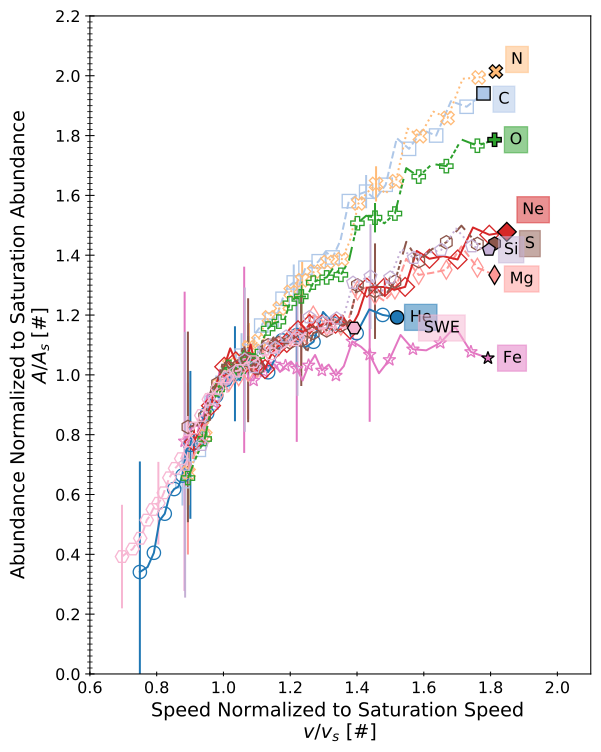
Slow wind composition is universal; fast wind fractionates by mass
Related Figures
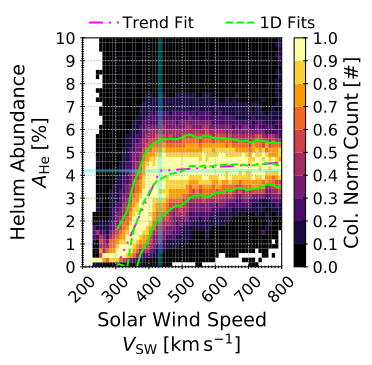
Helium abundance saturates at 4.19% above 433 km/s
Helium abundance undergoes a sharp transition at 433 km/s.
Links to Helium Abundance page; helium shows similar saturation behavior but at different speed threshold
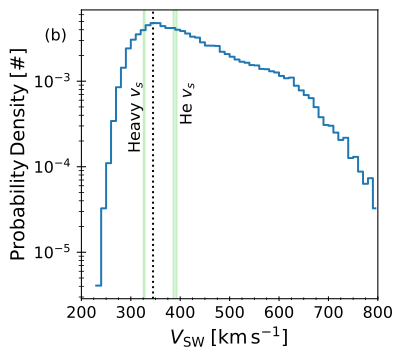
Heavy and helium transition speeds bracket the most common wind
The heavy-element transition speed sits just below the most commonly observed solar wind speed, while helium's transition speed sits above it.
Context showing the saturation speeds straddle the solar wind's peak distribution, making the discrepancy operationally important
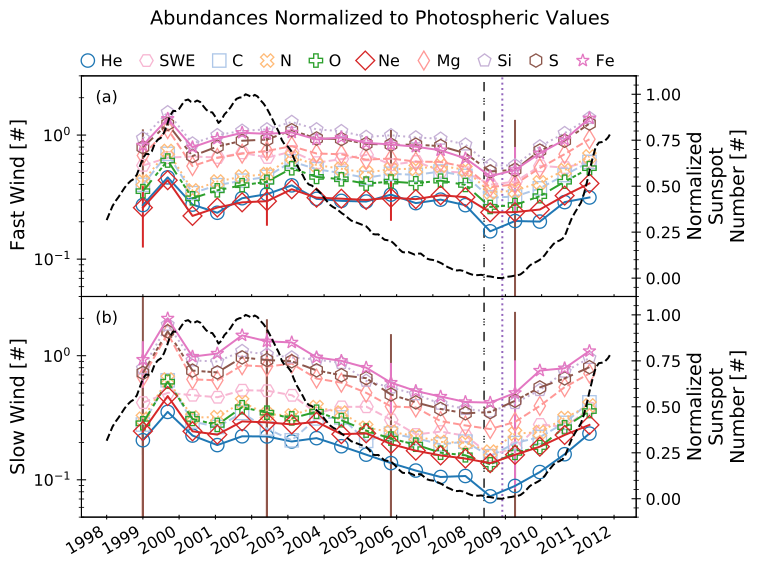
Slow-wind heavy element abundances dip at solar minimum
In the slow wind, all heavy element abundances except carbon track the solar cycle strongly, dropping during the deep solar minimum around 2008–2009 and recovering as activity rises.
Demonstrates that slow-wind heavy element abundances dip at solar minimum, confirming the solar cycle modulation seen in helium extends across the periodic table
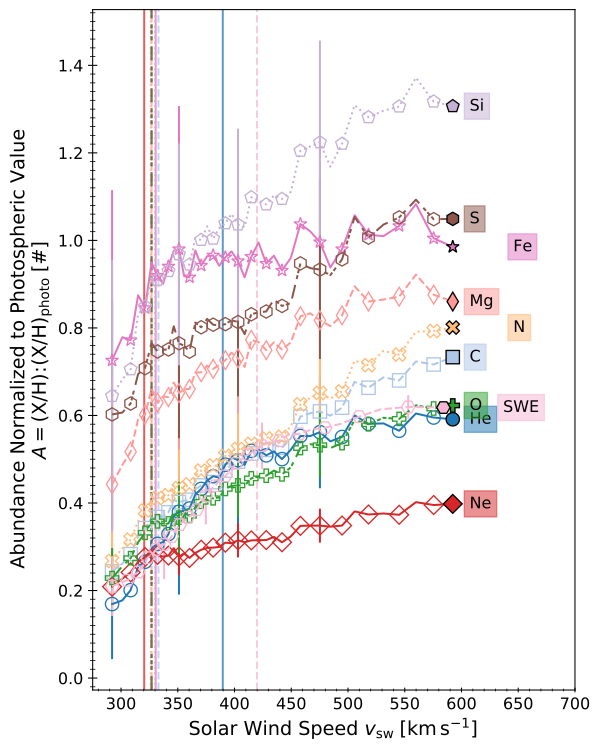
Heavy ions transition to fast wind 75 km/s slower than helium
Every element follows the same two-regime pattern: a steep rise at lower speeds and a shallower trend at higher speeds.
Shows the raw data before normalization, revealing the 75 km/s gap between heavy-ion and helium saturation speeds
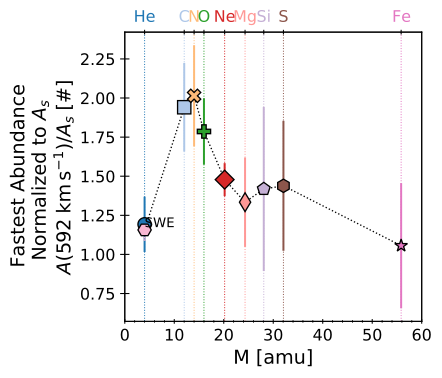
Fast wind reveals an unexplained mass-dependent fractionation
In fast solar wind, lighter heavy elements are enhanced more above their transition values than heavier ones, forming a clear mass-dependent trend.
Fast-wind enhancement shows mass dependence above saturation, motivating the charge-state analysis
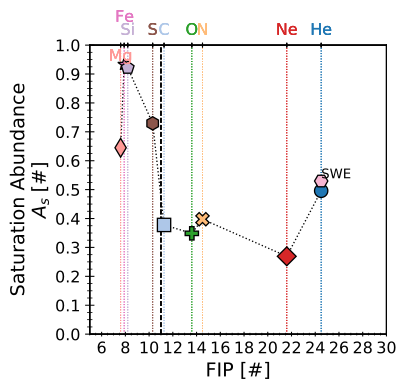
Transition abundances confirm expected FIP fractionation pattern
The roughly two-fold enhancement of low-FIP elements over high-FIP elements at the fast-slow transition point matches the well-established FIP effect pattern.
Saturation abundances show expected FIP pattern, revealing where chromospheric fractionation sets composition
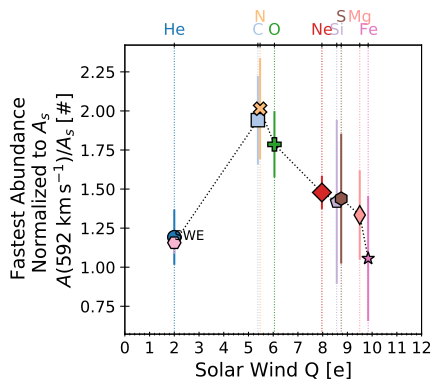
Charge state organizes fast wind fractionation into a tight trend
The fast-wind fractionation correlates far more tightly with charge state than with mass, FIP, or mass-to-charge ratio, as measured by a robust coefficient of determination (R-squared of 0.95 for charge state versus below 0.55 for all other quantities tested).
Explains the divergence above saturation—charge state (R²=0.95), not mass, controls fast-wind fractionation
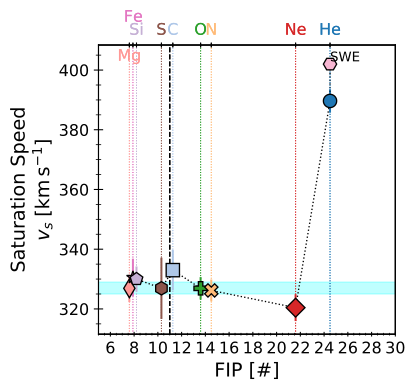
Transition speed does not depend on ionization energy
The fast-slow transition speed is essentially the same for all heavy elements regardless of how easily they are ionized.
Proves saturation speed is independent of first ionization potential—all heavy elements cluster at 327 km/s
See Also
Source
The transition from slow to fast wind as observed in composition observations
Astronomy and Astrophysics (2025)
View Paper© 2025 The Authors. CC BY 4.0