




Solar Wind Compressibility
How density fluctuations regulate helium
Hydrogen compressibility (density fluctuations) is the primary regulator of helium abundance saturation in the solar wind. When compressibility drops below 9%, helium saturates at a universal value regardless of speed or Alfvénicity. This incompressibility threshold provides a powerful diagnostic for identifying solar wind source regions.
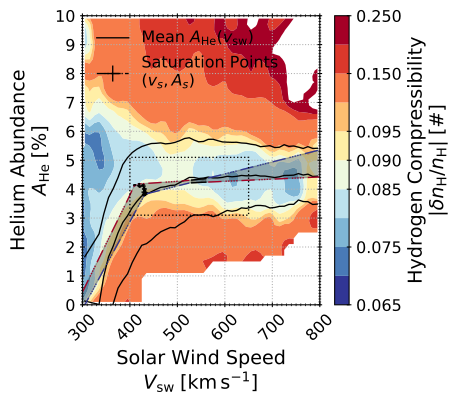
Compressibility reveals structure hidden in the helium plateau
Related Figures
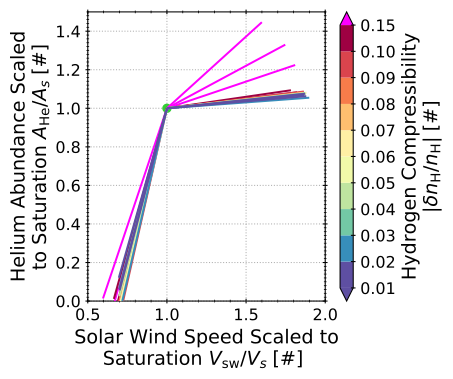
Incompressible curves collapse onto a universal shape
When each curve is normalized to its own saturation point, the incompressible curves collapse onto a single universal shape.
Demonstrates that limiting compressibility < 15% excludes confounding impacts and enables reliable source region identification
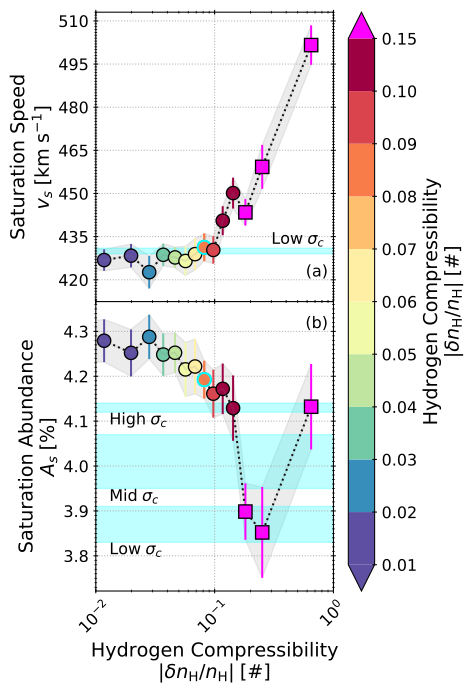
Saturation speed and abundance shift at the compressibility boundary
Saturation speed increases with compressibility, stepping up sharply at the incompressible-compressible boundary near 0.15.
Demonstrates how the transition speeds between classification regimes depend on plasma compressibility
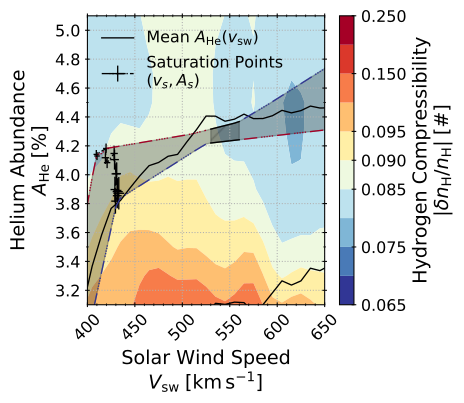
Compressibility contour gradient reverses at saturation
At the saturation point, the compressibility contour gradient reverses direction.
Zooms into the saturation region to show that the compressibility contour gradient reverses at the saturation point, linking helium composition set deep in the corona to density fluctuation behavior during interplanetary transit
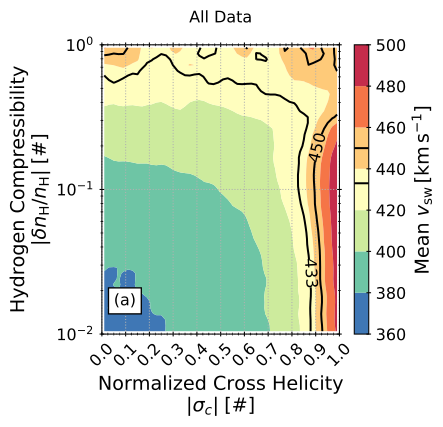
Mean speed exceeds saturation only in Alfvenic wind
Mean solar wind speed exceeds the largest incompressible saturation speed only in the Alfvenic, incompressible region.
Shows that mean speed exceeds the saturation threshold only in Alfvenic, incompressible wind, demonstrating that compressible wind carries fast-wind-like helium at slower speeds and exposing the limitation of speed-based source classification
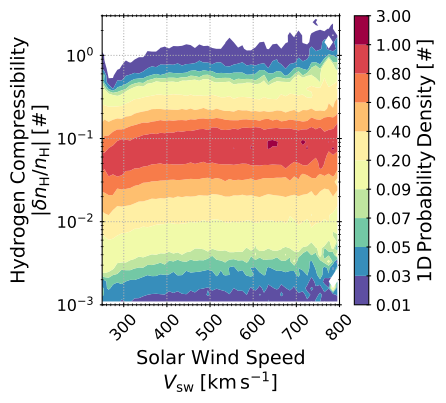
Hydrogen density fluctuations persist across all speeds
Hydrogen compressibility changes systematically with solar wind speed.
Introduces hydrogen compressibility as a classification variable, showing that compressible and incompressible fast wind coexist at the same speeds and that speed alone cannot distinguish them
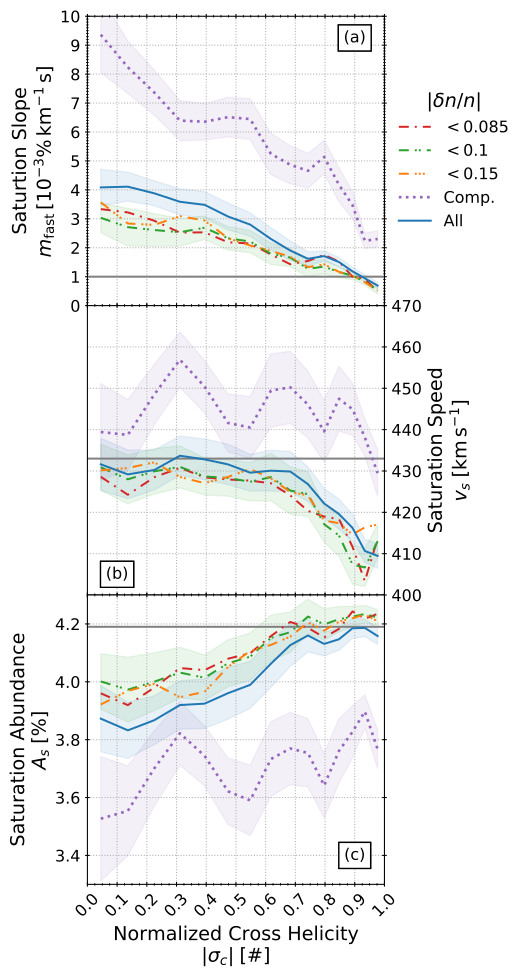
Excluding compressible wind flattens the wave-activity dependence
When compressible wind is progressively excluded, the dependence of saturation parameters on wave activity diminishes substantially.
Resolves the central puzzle from the companion paper: progressively excluding compressible wind flattens the wave-activity dependence of saturation parameters, showing that what appeared to be a wave-activity effect was actually driven by compressibility
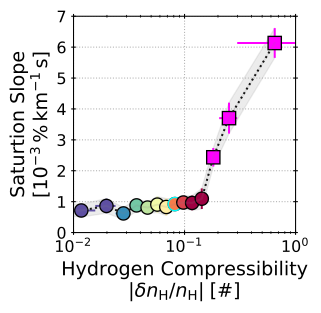
Compressible wind has six times steeper helium gradients
The helium gradient above saturation is nearly zero for incompressible wind, consistent with the expected flat plateau from open-source fast wind, but increases sharply for compressible wind.
Provides the clearest quantitative evidence that compressible fluctuations cause anomalous helium behavior: the helium gradient above saturation jumps six-fold once compressibility exceeds the 0.15 threshold
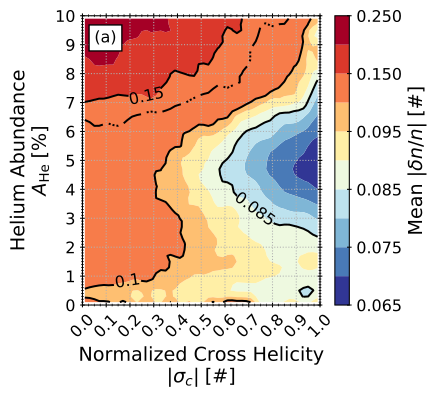
Mean compressibility concentrates at high helium, low wave activity
Compressible fluctuations concentrate in the region of high helium and low wave activity, precisely the ambiguous zone that the companion paper's classification could not resolve.
Identifies the high-helium, low-wave-activity region as compressible wind, resolving the companion paper's ambiguous classification zone and providing the physical mechanism behind the anomalous helium enhancement
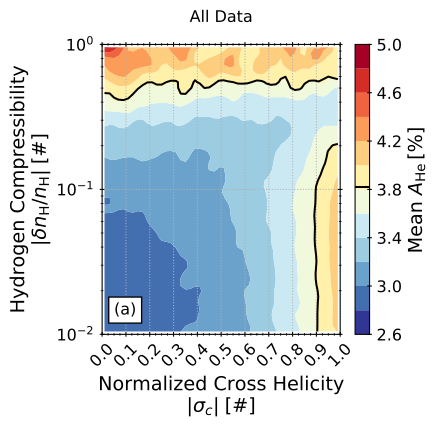
Mean helium reveals two distinct high-helium islands
Enhanced mean helium above saturation exists in two physically separated regions.
Reveals dual role of compressibility in mean abundance vs variability
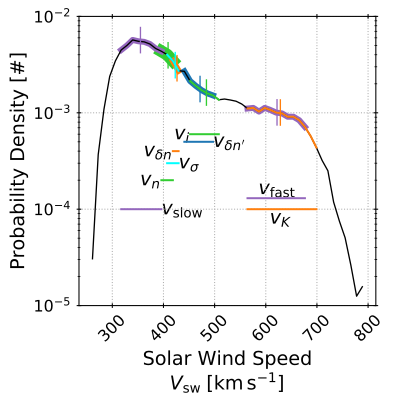
Derived speeds map onto the bimodal wind distribution
Characteristic speeds from compressibility analysis (this paper), wave activity analysis (companion paper), and independent energy budget studies all map onto distinct, physically meaningful portions of the bimodal speed distribution.
Maps compressibility-derived characteristic speeds onto the bimodal wind distribution alongside wave activity and energy budget analyses, showing how compressible and incompressible saturation speeds delineate distinct transition regions
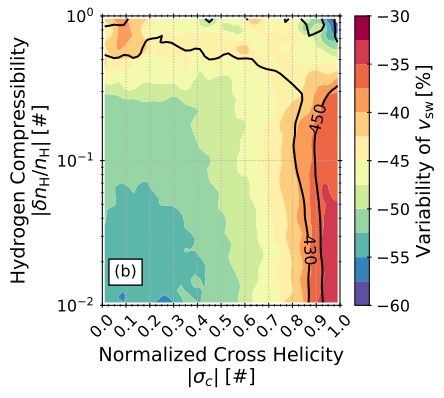
Speed variability is larger in Alfvenic than compressible wind
Speed variability is larger in the Alfvenic subset than in the compressible subset, which is the opposite pattern to helium variability in Figure 15d.
Reveals that compressible wind has highly variable helium but less variable speed, the opposite of Alfvenic wind, confirming that compressibility drives helium changes independently of speed
See Also
Source
On the Regulation of the Solar Wind Helium Abundance by the Hydrogen Compressibility
The Astrophysical Journal Letters (2026)
View Paper© 2026 The Author(s). Published by the American Astronomical Society. CC BY 4.0