



Sources of the Solar Wind
Understanding where the solar wind is born
The solar wind originates from different regions on the Sun, each with distinct magnetic topologies. By combining helium abundance and cross helicity measurements, we can trace in situ observations back to their solar source regions.
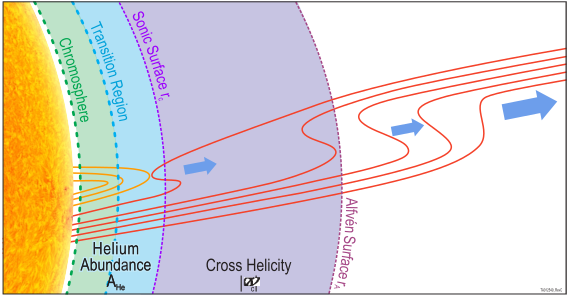
Helium and wave properties are set at different heights above the Sun
Related Figures
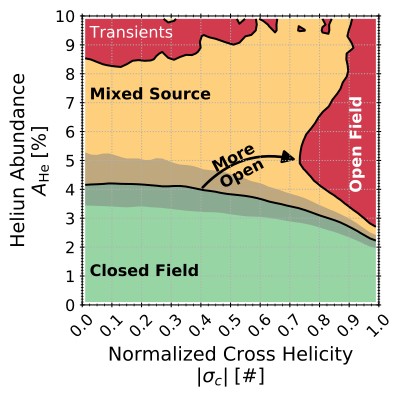
A new classification maps solar wind to its magnetic source
This classification scheme distills the quantitative contour analysis into a practical map of solar wind source regions.
Shows the operational classification scheme derived from the physics in Figure 2
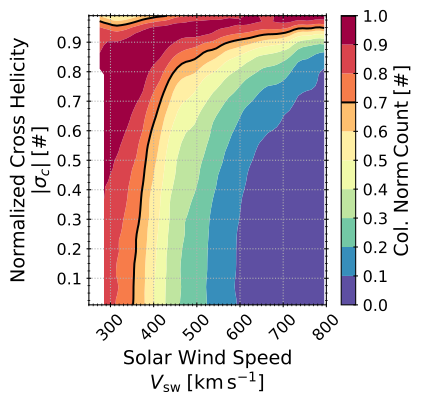
Alfvenic wave activity concentrates in faster wind
The solar wind becomes increasingly Alfvenic as speed rises.
Establishes the baseline relationship between Alfvenic wave activity and speed, showing that fast wind from continuously open sources is wave-rich while slow wind spans all wave levels, motivating the need for multi-parameter source classification
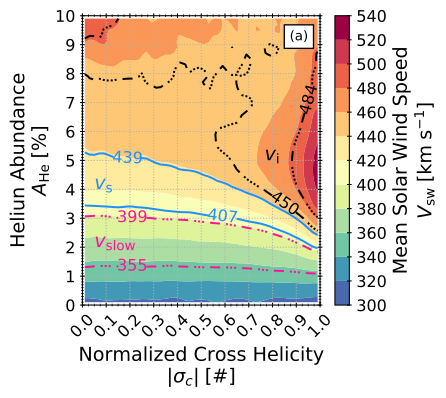
Mean speed in the helium-wave plane reveals two source populations
Two distinct populations emerge in the combined helium-wave activity space.
Quantitative data underlying the classification cartoon
See Also
Source
Cross Helicity and the Helium Abundance as an In Situ Metric of Solar Wind Acceleration
The Astrophysical Journal Letters (2025)
View Paper© 2025 The Author(s). Published by the American Astronomical Society. CC BY 4.0