




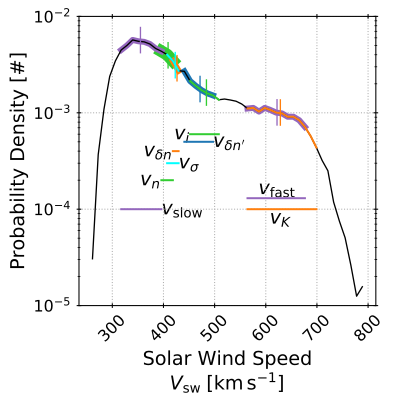
Derived speeds map onto the bimodal wind distribution
What We See
This chart shows the probability of observing the solar wind at different speeds, forming a tall peak around 355 km/s for slow wind and a smaller shoulder near 622 km/s for fast wind. Nine color-coded horizontal segments below the curve mark characteristic speed ranges from this paper, the companion paper, and related studies. Each segment is labeled and positioned at different vertical offsets to avoid overlap, creating a visual summary of where different analyses place key transitions in the solar wind.
The Finding
Characteristic speeds from compressibility analysis (this paper), wave activity analysis (companion paper), and independent energy budget studies all map onto distinct, physically meaningful portions of the bimodal speed distribution. The incompressible saturation speed range (417 to 436 km/s) aligns with the transition region between slow and fast wind peaks. The compressible saturation speed range (435 to 508 km/s) falls at higher speeds in the intermediate zone likely corresponding to the Alfvenic slow wind. These speeds collectively delineate where the solar wind's source region character changes.
Why It Matters
By placing all derived speed thresholds on a single distribution, this figure shows how multiple independent analyses converge on a consistent picture of solar wind structure. The speed ranges from density fluctuations complement rather than contradict those from wave activity and energy flux analyses, building confidence that the physical picture is robust. The compressible speed range falling in the intermediate zone where ad hoc slow-fast thresholds are typically set explains longstanding ambiguity in source region identification.
Appears In
Alterman 2026 ApJL 996 L12 · fig 14