




Speed variability is larger in Alfvenic than compressible wind
What We See
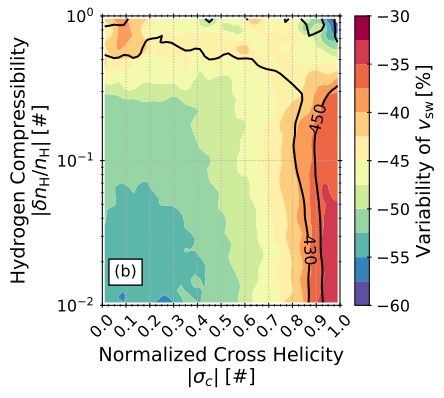
This panel maps the variability of solar wind speed (color) across wave activity (horizontal axis) and compressibility (vertical axis, logarithmic). The Alfvenic region at lower right shows the highest speed variability with warm colors, while the compressible region at top shows relatively lower speed variability. The black contours at 433 and 450 km/s from panel (a) are also shown. Speed variability is moderate across most of the plane but peaks in the incompressible, high-wave-activity zone.
The Finding
Speed variability is larger in the Alfvenic subset than in the compressible subset, which is the opposite pattern to helium variability in Figure 15d. Compressible wind has highly variable helium but less variable speed, while Alfvenic wind has less variable helium but more variable speed. This decoupling implies that compressibility drives helium changes independently of speed, confirming that compressible density fluctuations rather than speed itself regulate the excess helium in compressible wind.
Why It Matters
The contrast between helium and speed variability patterns across the two populations provides strong evidence that different physical mechanisms control helium in each. If speed were the primary driver of helium enhancement, both quantities should vary together. Their decoupling means that models predicting helium content from speed alone will systematically fail for the compressible population, which constitutes a significant fraction of solar wind at intermediate speeds.
Appears In
Alterman 2026 ApJL 996 L12 · fig 16b