




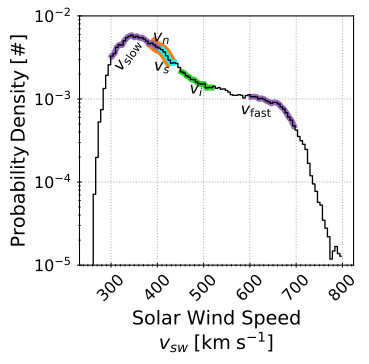
Five characteristic speeds span the fast/slow transition zone
What We See
The solar minimum wind speed distribution is shown as a solid black curve on a logarithmic vertical axis. Five color-coded segments highlight consecutive speed ranges: v_slow in purple near 355 km/s at the distribution peak, v_n in orange near 409 km/s just below the peak's shoulder, v_s in cyan spanning 407-439 km/s along the declining slope, v_i in green near 484 km/s farther down the slope, and v_fast in purple near 622 km/s at the fast-wind shoulder. The highlighted segments trace sequentially from the slow-wind peak down toward the fast-wind shoulder.
The Finding
The five characteristic speeds derived throughout this paper map onto consecutive portions of the solar minimum speed distribution. They reveal that the broad transition zone between the slow and fast wind peaks (approximately 355-484 km/s) contains multiple distinct physical transitions occurring in sequence. These transitions are: first the slow wind peak, then peak helium loading, then helium saturation, then the equal mixing point of slow and fast source populations. The transition region spans roughly 130 km/s rather than occurring at a single boundary.
Why It Matters
By placing all derived speeds onto the observed distribution, this figure explains why the fast/slow boundary has been so difficult to define: it is not a single boundary but a sequence of overlapping transitions. Different studies have chosen different thresholds because different physical signatures change at slightly different speeds within this zone. The paper's proposed classification using helium and wave activity avoids this ambiguity entirely by not relying on a single speed threshold to separate source regions.
Appears In
Alterman 2025 ApJL 982 L40 · fig 9