




Heavy ion abundances shift between CIR and SEP values with the solar cycle
What We See
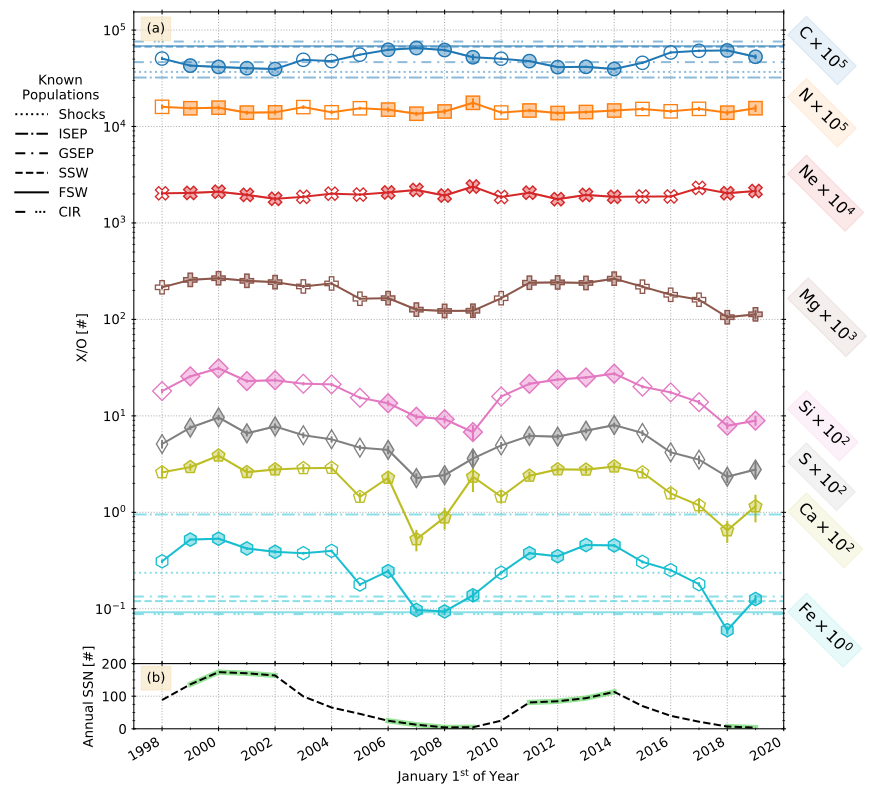
Panel (a) shows eight colored time series from 1998 to 2019, each tracing a different element's abundance relative to oxygen on a logarithmic scale. Species are vertically offset by labeled scale factors (C x10^5 at top through Fe x10^0 at bottom) and identified by colored labels on the right. Horizontal reference lines in various styles mark typical abundances from known populations: interplanetary shocks, impulsive SEP events, gradual SEP events, slow and fast solar wind, and CIRs. Elements like Mg, Si, S, Ca, and Fe visibly rise during solar maximum years and fall during minimum. Carbon moves in the opposite direction. Panel (b) shows annual sunspot number with green shading highlighting solar cycle extrema years; corresponding points in panel (a) are partially filled.
The Finding
Heavy element abundances in quiet-time suprathermal ions change systematically with the solar cycle. Elements with low first ionization potential (Mg, Si, S, Ca, Fe) positively correlate with sunspot number at levels above +0.8, while carbon anticorrelates at -0.84. During solar minimum, quiet-time abundances approach values characteristic of co-rotating interaction regions. During solar maximum, they shift toward values characteristic of gradual solar energetic particle events. This systematic shift reveals that the dominant source of quiet-time suprathermal ions changes with solar activity.
Why It Matters
These quiet-time suprathermal ions form the seed population that gets accelerated to hazardous energies during solar storms. Understanding how that seed population's composition changes is essential for predicting the makeup of future solar energetic particle events that threaten astronauts and spacecraft. The clear solar-cycle dependence, benchmarked against known reference populations, points to fundamentally different source processes during solar minimum versus maximum, constraining models of how this seed population is generated and maintained.
Appears In
Alterman 2023 ApJ 952 42 · fig 4